The Guru Dutt Sondhi Archive
An intergenerational family archive preserving the life, legacy, and historical contributions of G.D. Sondhi through photographs, documents, and personal memories.
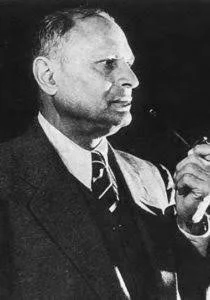
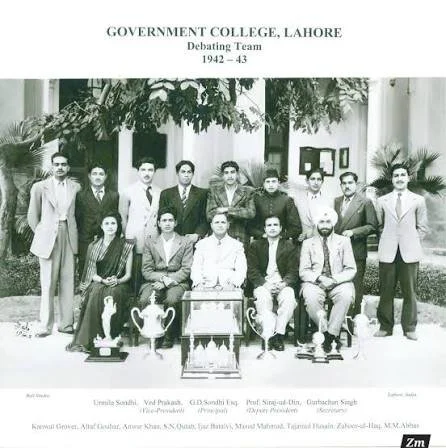
Guru Dutt Sondhi was an Indian educationist, sports administrator, and cultural pioneer. His formidable academic career started at Government College, Lahore, where he excelled as a distance runner and athlete. He then moved to England to pursue higher education at Trinity College, Cambridge, subsequently qualifying as a barrister and passing the bar in London. After returning to India, he utilized his extensive training and made history by becoming the first Indian principal of his old alma mater, Government College, Lahore. His lasting global impact also lies in his significant role in international sports.
He served as the Sports Advisor to the Government of India and was co-opted as a member of the International Olympic Committee (IOC) in 1932; he served for an extraordinary 34 years, culminating in his election to the prestigious IOC Executive Board (1961–1965). Domestically, he shaped India's sports infrastructure as the Chairman of the Punjab Olympic Association and the long-serving Secretary-General of the Indian Olympic Association (1928–1952), managing the Indian Olympic teams at the 1928 Amsterdam, 1932 Los Angeles, and 1936 Berlin Games.
A staunch defender of keeping politics out of sports, he founded the Western Asiatic Games (1934), became the first President of the Athletics Federation of India (1946–1950), Vice-President of the International Hockey Federation (1946), and famously founded the Asian Games Federation, culminating in the inaugural 1951 Asian Games under the motto he designed: "Ever Onward."
About G.D Sondhi
Why an Archive?
The G.D. Sondhi Digital Archive is established by his descendants to preserve, celebrate, and share the extraordinary life and legacy of our great-grandfather. This collection serves as a bridge between our family's heritage and global history, preserving his legacy for generations to come.
By centralizing his personal correspondence, photographs, writings, and official memorabilia, the archive aims to safeguard his contributions to the Olympic movement and the cultural tapestry of post-independence Asia. It is a living testament to his values of unity, leadership, and intellectual curiosity, ensuring his inspiring journey continues to educate and guide future generations of our family and researchers worldwide, and to preserve the values passed down to each one of us and share them with the world.